Seven A’s of healing trauma
In his book ‘When the body says no’ Dr. Gabor Maté proposes seven A’s of healing trauma: Acceptance, Awareness, Anger, Autonomy, Attachment, Assertion, Affirmation.
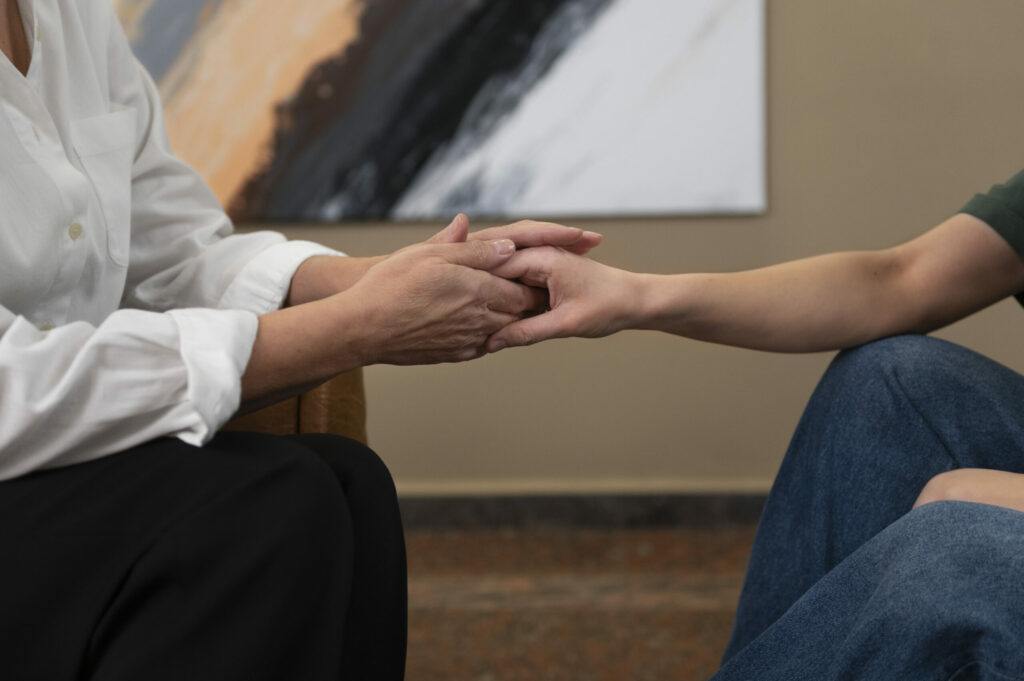
Acceptance
Acceptance is about embracing every part of who we are.
Healing trauma is about becoming whole, and we must therefore accept every part of who we are with care and empathy. This does not mean we have to like everything we find out about ourselves. It simply means looking at ourselves without judgment. If we want to heal from trauma, we need to treat ourselves with compassion and curiosity.
Awareness
Awareness means noticing what is happening inside us, both physically and emotionally.
To be healthy, we need to pay attention to our inner selves. This helps us protect ourselves from stress and outside pressures. Many of us have learned to disconnect from our bodies. We are taught to value our rational thinking above our bodies and emotions.
When healing trauma, we need to reconnect with our bodies and emotions. Ask yourself: How does my body feel? What is it telling me? What are my signs of stress or exhaustion?
Emotional awareness is about noticing our feelings and how we relate to others. We can ask ourselves: How are my relationships, deep down?
Our bodies and emotions know what is good for us. To become whole, we need to recognize our own emotional truth.
Anger
Anger involves feeling and processing it in our bodies, and learning to express it in a healthy way.
If we hold in our anger, we increase our risk of illness. Therefore, if we want to heal, we need to speak up about our needs, limits and boundaries.
Anger is crucial in that process because it shows us when our boundaries have been crossed or when something feels wrong. Unfortunately, many people have not learned how to express anger in a healthy way, so they either hold it in or let it out as rage. Both can harm our health and relationships. Despite being difficult, it is possible to express anger in a healthy way. But how do we do it?
We should notice anger in our bodies and accept that it is there. Next, we can think about what caused it. Maybe a boundary was crossed, or our feelings were hurt. We can choose to address it through conversation or confrontation, or let it go. What matters is that we do not push the emotion away.
Autonomy
Autonomy means developing a sense of control from within.
Whether our illness is physical or mental, it often comes from a long struggle to find our own identity. Consequently, if we want to be healthy, we need to become more independent.
Our identity is often linked to boundaries because boundaries protect the self. As a result, people most at risk for developing disease, are those whose boundaries were crossed when they were young. Many parents have not learned about healthy boundaries themselves and hence struggle to set them with their children.
If there are no boundaries, parent and child become too closely connected. The child struggles to develop their own sense of self and, as a result, may experience more boundary violations later in life. This can lead to physical or mental health issues.
Boundaries are not visible. They are our inner sense of being separate from others. To heal from trauma, we need to become independent people who know what we value, what we want, and what we do not want.
Attachment
Attachment is the ability to form caring and supportive connections with others.
Many people grow up without strong connections or the feeling of being loved, no matter what. A lack of connection can cause us to shut down and pull away from others, which can harm our health. We need to relearn how to be open and vulnerable with others. Building close connections helps us heal.
Assertion
Assertion is the ability to exist as ourselves without needing to do or prove anything.
We can be ourselves without feeling the need to justify our existence. We neither have to prove nor achieve anything in order to have worth. It is enough to simply BE. Assertion means valuing ourselves, no matter our achievements or past. Every person has value, regardless of what they do or who they are.
Affirmation
Affirmation means making positive statements and moving toward what matters to us.
To heal, we need to work toward things we care about. Two important values that help us heal and stay whole are our creative side and our connection to the universe.
Our creative self is the part of us that makes new things. This could be art, music, writing, inventions at work, cooking, gardening, or making things with our hands. Everyone has the urge to create. Honoring this urge helps us heal. Ignoring it can make us feel empty inside.
The second affirmation is our connection to the universe. To avoid feeling alone or isolated, we need to feel connected to the world and to other people. Feeling connected to the universe is a spiritual experience and reminds us that we are all part of something bigger.
❤️
We hope you found this helpful. If you are curious about healing from trauma, read our full article on Dr. Gabor Matés book When the body says no
[…] Gabor Matés Seven A’s of healing trauma on how to heal and […]