When the Body Says No: Gabor Matés Path to Healing
When we forget to protect our boundaries, our body says no through chronic illness and stress. Discover how emotional repression impacts your health and how to heal.
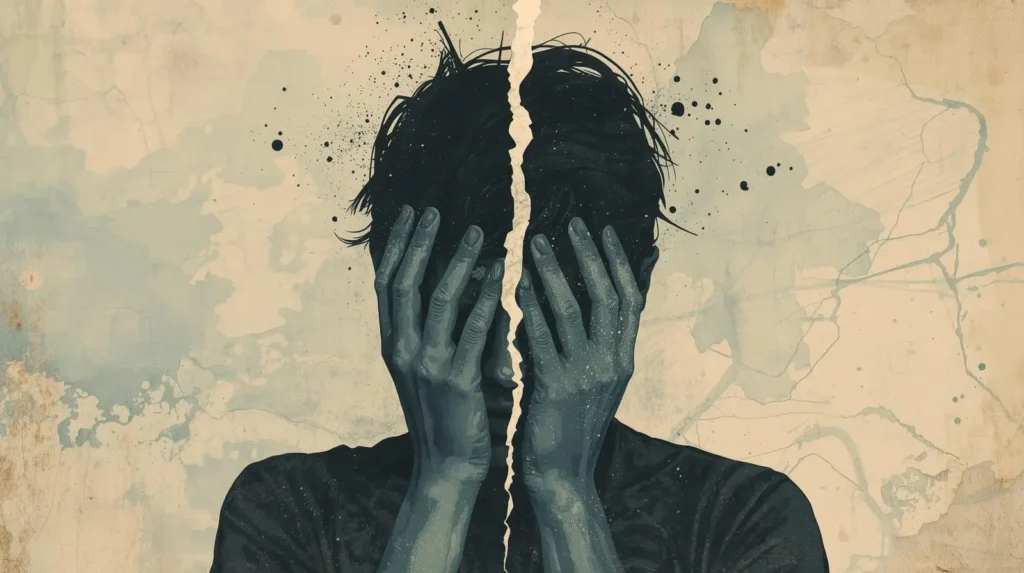
Can a lifelong habit of emotional repression make you physically ill? In his groundbreaking book ‘When the Body Says No’ Dr. Gabor Maté explores the hidden links between chronic stress, childhood trauma, and physical disease.
As a medical doctor, Maté noticed a striking pattern among patients suffering from illnesses like cancer, depression and autoimmune diseases: none of them had ever learned to say no.
Even though his patients had different illnesses and backgrounds, Maté noticed that they all had trouble expressing their emotions. He found that mind and body are closer linked than expected.
Below, we break down the 3 core insights from his work on how our minds and bodies operate as one single system.
1. The Mind-Body Connection and the PNI System
Western medicine often treats the mind and body as separate. But our emotional centers, nervous system, immune system, and hormones operate as one unified system. Dr. Maté calls it the PNI (psycho-neuro-immuno-endocrine) super system.
All parts of this system work together to protect the body. If one part is affected, the others are too. Emotions are part of this system, and this is why feeling and expressing them is crucial for our health. In fact, studies prove that emotional stress directly changes how our immune system fights off illness.
When you constantly swallow your anger or suppress your grief, you are sending stress signals directly through the system. Over time, this can weaken your immune defenses and make you ill.
If you want to dive deeper into how to restore your balance, read our guide to Yin and Yang Balance.
2. How Emotional Repression Causes Illness
Dr. Maté says that disease does not happen in a vacuum; it is shaped by our life history. Many of us are taught not to feel and express our emotions. Instead, we are told to toughen up or not be so sensitive. However, being in touch with our emotions is key to living a healthy life.
Through decades of medical practice, Dr. Maté saw a set of emotional coping styles that often lead to chronic illness:
- Inability to Say No: Always putting other people’s needs before your own.
- Repression of Anger: Pushing down your boundaries and feelings of aggression to keep the peace.
- Hyper-Rationality: Relying only on logic and intellect while ignoring the emotional signals and wisdom of the body.
- Unclear Boundaries: Feeling deeply responsible for how other people feel, leading to constant inner stress.
3. The Path to Healing: Learning Emotional Competence
Healing is not about feeling guilty for your illness; it is about becoming whole again. To guide your body back to safety, Maté introduces the concept of emotional competence as an important health tool:
- Locate Your Boundaries: Start paying attention to your bodily signals (like a tight jaw or an upset stomach) when you want to say no but end up saying yes.
- Practice Honest Thinking: Have the courage to look at what is not working in your life. Resist the urge to mask it in positive thinking.
- Reclaim Your Anger: Understand that healthy anger is nature’s tool to protect your boundaries and declare that you matter.
To learn how to express your boundaries, you can read our guide on how to practice healthy anger management.
How Childhood Trauma Shapes the Nervous System
Our earliest years do not just shape our minds; they literally build our nervous system. As infants, we cannot regulate our own stress. We are entirely dependent on our parents to find safety. In a very physical way, the nervous system of our parents becomes the template for our own.
For a child’s nervous system to develop healthily, it requires a deep, emotional connection known as attunement.
Attunement occurs when a parent truly “tunes in” to their child’s silent signals. It is the invisible thread that connects a crying baby with a soothing voice, or a scared toddler with a warm, steady embrace. When a parent reads these emotional signals and responds in a good way, they act as a guide that regulates the child’s nervous system and creates safety.
However, when a parent is chronically stressed or emotionally unavailable, this vital connection breaks down. If a child repeatedly experiences a lack of attunement, their body remains trapped in a state of high alert.
This is where the root of hidden trauma lies. Childhood trauma rarely stems from dramatic, isolated events. More often, it is the quiet, invisible absence of emotional attunement in those early years.
When a child learns that their emotions are too much for their parents to handle, they begin to push them down. This can lead to stress and chronic illness later in life. In fact, research shows that early emotional neglect physically shapes how our brain handles stress.
Reclaim Your Boundaries and Give Your Body Permission to Rest
Healing from a lifetime of emotional repression does not happen overnight. It is a slow process of unlearning the belief that you must be ‘perfect’ or ‘always strong’ to be worthy of love.
When you begin to listen to the quiet whispers of your body – the tight shoulders, the anxious stomach, or the sudden fatigue – you are starting to undo years of stress. Your symptoms are not your enemies; they are your body’s compass trying to guide you back home to yourself.
Every time you say a compassionate “no” to someone else, you are saying a life-giving “yes” to your own health. You do not have to wait for your body to break before you give it permission to rest. ❤️
Ready to take the next step? Discover Gabor Maté’s 7 A’s of Healing – a great roadmap to your recovery.