

NADA Acupuncture: Healing the Nervous System
NADA Acupuncture helps you find balance with very simple steps. This guide explains the history and how it works.

What is NADA Acupuncture?
In our fast-paced world, finding inner peace can feel like an uphill battle. Many people struggle with stress, anxiety, or poor sleep. Luckily, there are natural methods to help our bodies heal and reclaim their natural balance. One of these methods is NADA Acupuncture.
NADA stands for the National Acupuncture Detoxification Association. It is a form of ear acupuncture that balances your nervous system.
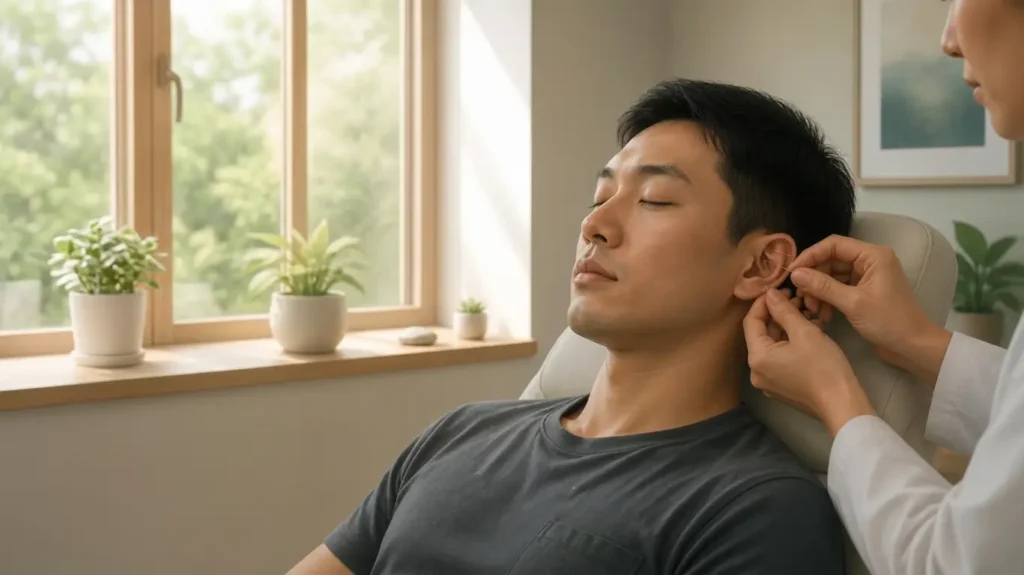
The treatment focuses on five points in each ear. As NADA practitioner Anne Sikora explains, five thin needles are inserted into each ear during a NADA session. You then sit or lie quietly for about 45 minutes. You relax and let the process work. Finally, after the time has passed, the practitioner gently removes the needles.
How Does NADA Acupuncture work?
First and foremost, NADA is a great tool for recovery. It helps calm your nervous system. This is important, because your nervous system is the foundation for your well-being. Therefore, when it is stressed, your mind and body suffer. But if you let go and relax, your body releases tension. In fact, research shows that NADA helps relieve anxiety, stress and physical pain.
For example, if you take medicine or go to therapy for anxiety, NADA can support that therapy. It does not replace a doctor, but instead makes your other treatments work better. In other words, it creates a good foundation for your recovery.
The 5 NADA Points Explained
To truly understand the method, it helps to examine the five ear points. Each point connects to a different organ and emotion. Together, they create a network for body relaxation.
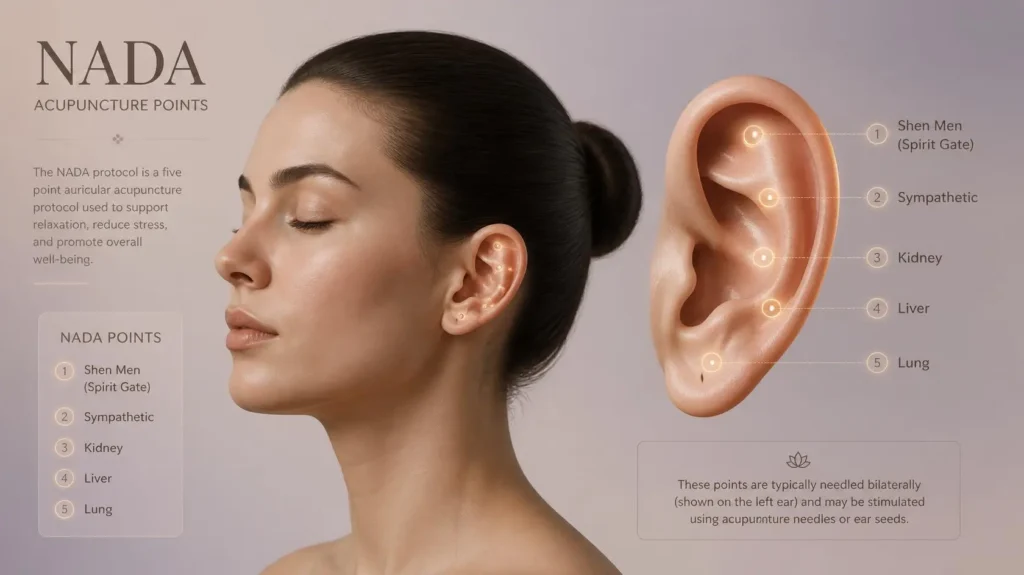
- 1. The Sympathetic Point: This point balances the autonomic nervous system. It helps you shift from a stressful ‘fight-or-flight’ mode into a peaceful state.
- 2. Shen Men (The Spirit Gate). This is one of the most famous calming points in acupuncture. It reduces anxiety, grounds your energy, and calms your mind.
- 3. The Kidney Point: The kidneys are said to store vital energy. This point helps you heal fear and boosts internal energy.
- 4. The Liver Point: The liver is often associated with anger´and frustration. Therefore, stimulating this point helps regulate emotions and clear mental blocks.
- 5. The Lung Point: This point supports lung health and is tied to the emotional process of letting go. It helps process grief and trauma, and breathe more deeply.
Who Invented NADA? A Brief History
The NADA method has an interesting history. Michael Smith, a doctor in New York, invented it in the 1970s. He noticed that many people struggled with drug problems and thus wanted to help them without using more drugs.
He found out that ear acupuncture was very useful. It both reduced the pain from drug withdrawal and lowered the cravings for drugs and alcohol. Following this succes, in 1985, Dr. Smith founded the NADA association. The method has since spread all over the world and is used in many different settings.
Where is NADA used?
Although the method was created for addiction recovery, today it is used much broader. NADA is found in many places worldwide:
- Psychiatric and Mental Health Facilities: Hospitals use NADA to reduce patient aggression, ease panic attacks, and improve sleep quality. NADA is as a helpful tool together with medication.
- Trauma and Disaster Relief: Rescue teams apply it in places like disaster zones and refugee camps. The treatment helps people calm down without having to talk a lot.
- Everyday Wellness Clinics: Holistic practitioners use NADA to help clients with stress and burnout. In fact, it is a great tool to fight the bad effects of burnout culture.
NADA Acupuncture Near You
If you want to find a NADA practitioner, or want to become one yourself, it should be easy. Because NADA is a global protocol, it is accessible in most parts of the world.
Where to Receive NADA treatment
You can find NADA at holistic health clinics and community wellness centers. Additionally, many public hospitals and addiction centers now include NADA in their standard care plans. In some cities you can find ‘NADA café’s’ or group sessions hosted by volunteers, where multiple clients can sit together in a quiet space and receive the treatment.
How to Become a NADA Practitioner
The NADA method is the same everywhere and easy to learn. Therefore, you do not need to be a licensed acupuncturist to perform NADA. Instead, nurses, coaches, and therapists can learn it quickly by taking a NADA training course. Even regular people, who do not work in healthcare, can take the course. These short programs focus on precise ear anatomy, clean needles and how to create a safe space for clients. A small, practical test gets you a certificate, and then you can start helping people right away.
Useful Resources for NADA
Would you like to learn more or find a session near you? Visit the offical website for the National Acupuncture Detoxification Association. This global platform can help you find training programs and places to get treatment in your area.