What Is Burnout Culture? A Guide To A Healthier Society
Modern society is driven by burnout culture. To protect our health, we must change the way society works

From Burnout Culture to Sustainable Society
Have you ever felt like you’re doing everything ‘right’ – ticking every box of success – yet your body is exhausted and your heart feels empty?
You are not alone.
We live in a culture obsessed with speed and efficiency, constantly pushing us to do more. In this system, we are taught to believe our personal value depends on our output. But human beings weren’t built to run at maximum speed all the time.
Our collective rush to produce is not only wearing us out. Scientists warn that overconsumption is also draining the planet’s resources.
To fix this, we have to rewrite the rules of society. We can start with three important changes:
- 1. Connect body and mind (Make healthcare holistic)
- 2. Introduce a universal basic income (Give everyone a financial safety net)
- 3. Create a balanced economy (Value human well-being over corporate growth)
Let’s take a closer look at each idea!
1: Holistic Healthcare: Connecting Body and Mind
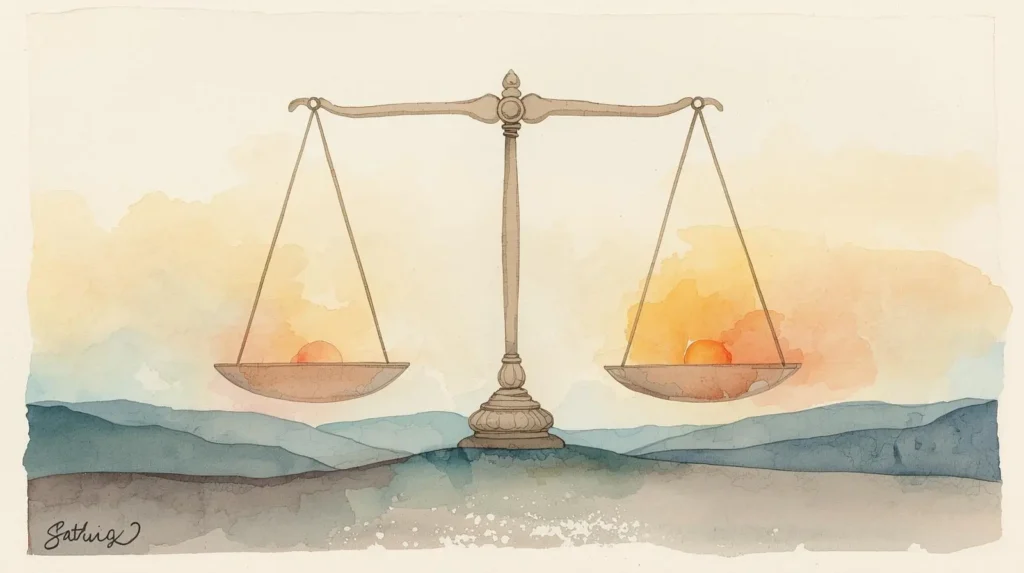
Our medical system often treats the human being like a car – fixing a broken part here and a symptom there. It separates physical and mental health into two different boxes.
But our nervous system doesn’t work in boxes. It doesn’t know the difference between physical and emotional pain. As Dr. Gabor Maté and modern science point out, emotional stress links directly to physical illness. Mind and body are one single system, and should be treated that way.
Therefore, we need a holistic healthcare system. When someone gets sick, we must look at the whole person by blending medical, psychological, and social care.
True health only happens when we look beyond the symptoms, and examine a person’s whole life. This includes emotional and physical health, relationships, family history, and life circumstances. We must care for the entire human being, not just the isolated parts.
2: Universal Basic Income: The Cure for Chronic Stress
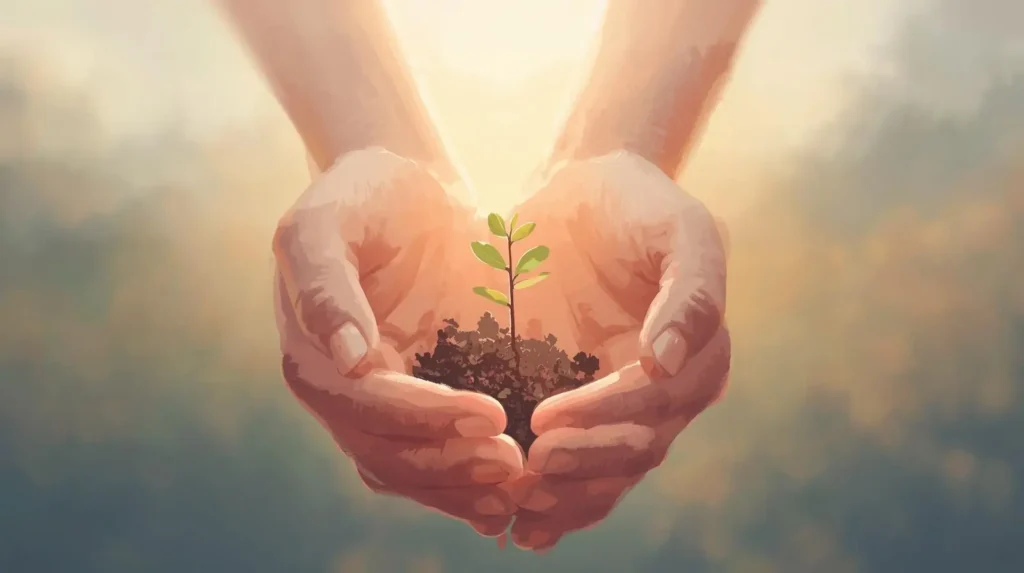
People often dismiss Universal Basic Income (UBI) as an abstract theory. In reality, UBI is one of the most powerful public health tools we have.
Today, our survival is tied to our employment. If we don’t work, we don’t eat. This setup creates a constant, underlying fear of poverty, trapping our bodies in a stressful fight-or-flight state. To change this, we must separate human survival from job status. UBI does exactly that.
Imagine a system where the government provides every citizen with a regular monthly payment—no strings attached. This steady income ensures that everyone can afford food, water, and housing. Consequently, it places a floor of safety beneath our feet and ends the struggle for survival.
When your survival is guaranteed, you gain a new kind of freedom. You can finally say ‘no’ to toxic or unsafe jobs. You get the breathing room to rest, heal, and care for your family. Additionally, you get the time to help out in your local community.
We already know this works. A basic income experiment in Finland proved that UBI leads to significantly better mental health and less stress.
And while UBI requires an investment, it saves money in the long run. It prevents people from burning out and getting sick, which slashes healthcare costs. It also cuts through bureaucracy, freeing social workers from spending countless hours checking and penalizing people in need.
3: Post-Growth Economy: Breaking Free from Burnout Culture

Right now, countries measure success by Gross Domestic Product (GDP)—a number that counts how fast we buy, sell, and consume. But GDP is a blind metric. It tells us absolutely nothing about the health of our people or our planet.
The obsession with endless growth in wealthy nations drives a crisis of overconsumption. We buy things we don’t need made from resources we can’t replace.
In fact, the richest 10% of people in the world cause up to 40% of environmental damage. The poorest 10% cause almost none. This makes no sense. Nature is the very foundation of our lives, yet we are destroying it for short-term profit and fleeting pleasures.
Therefore, we need to stop chasing endless growth, and move toward a Post-Growth Economy. In fact, a recent UN report shows we can end poverty without GDP growth. It’s time to focus on long-term well-being instead of short-term corporate growth.
How To Combat Burnout Culture
Ultimately, good health is not just our own personal responsibility. It is also a reflection of the air we breathe, our sense of belonging, and the financial security we feel.
When our systems stop serving us, we have to change them. By updating our healthcare, adopting a Universal Basic Income, and embracing new economic models, we can fix our broken systems. We can create a world where people and the planet can thrive.
Books to Understand Burnout Culture
If you want to dive deeper into burnout culture, these books offer great insights and tools for recovery:
- ‘The Burnout Society’ by Byung-Chul Han: A brilliant essay exploring how modern society forces us to exploit ourselves in the name of freedom and productivity.
- ‘Do Nothing: How to Break Away from Overworking, Overdoing, and Underliving’ by Celeste Headlee: A practical guide on how to escape the obsession with efficiency and reclaim your time.
- ‘Rest Is Resistance: A Manifesto’ by Tricia Hersey: A powerful call to view rest as a necessary act of resistance against burnout culture.
You can read more about living a sustainable life in our guide holistic lessons for a balanced life.