The Exhaustion Economy: Rethinking Our Systems for Human Health
To be healthy, we need a sustainable society. But how exactly does society affect our health?
The Exhaustian Economy
Have you ever felt like you’re doing everything ‘right’ – ticking every box of succes – yet your body feels exhausted and your heart empty?
You are not alone.
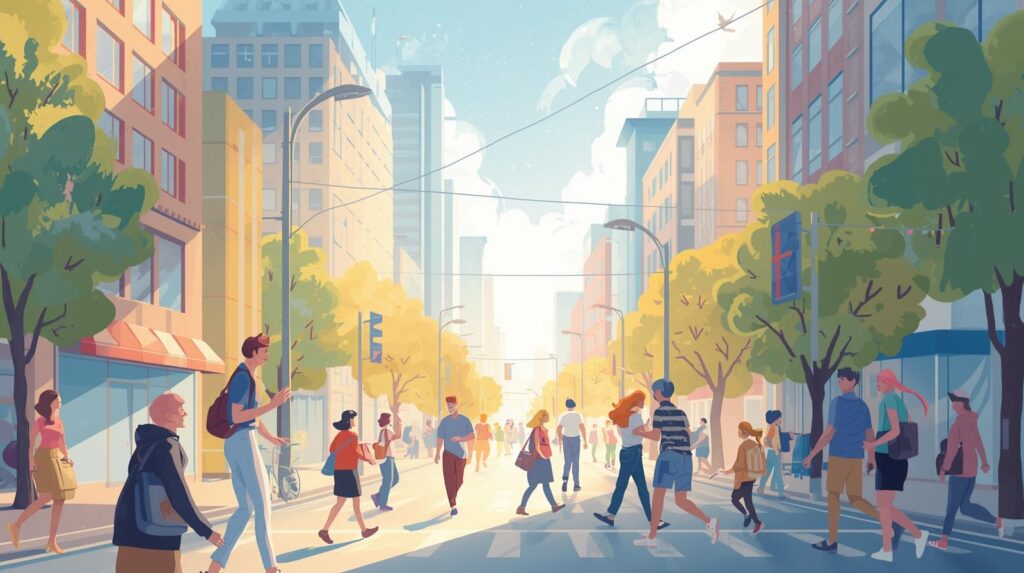
We live in a society that worships speed, efficiency, and relentless financial growth. You could call it an ‘exhaustian economy‘. We have been conditioned to believe that our worth equals our productivity. But human bodies were never designed to run like machines.
Our collective rush to produce is not just burning us out; it is depleting the planet. Our habits of overconsumption harm ecosystems, from plastic in the oceans to carbon dioxide in the air.
It’s hard to build a sustainable life inside unsustainable systems. To be healthy, we must look beyond individual lifestyle choices and transform the very fabric of our society.
We must change the invisible systems that shape our daily lives in three systemic shifts:
- 1. Treat Mind and Body as One. (Adapt Healthcare Systems)
- 2. Offer an Unconditional Basic Income (UBI)
- 3. Create an Economy of Balance, Not Just Financial Growth.
Let’s take a closer look at each idea.
1: From Broken Parts to Whole Humans: Integrating Mind and Body

Our current medical system treats the human body like a car, fixing a broken part here and a symptom there. But our nervous systems do not distinguish between physical or emotional symptoms. Trauma and emotional stress can manifest directly as physical disease.
Mind and body are a single, flowing system and this is why we need integrated, holistic healthcare. We need doctors, psychologists, and social workers to collaborate in treating the whole human being, not just the diagnosis.
Today, our healthcare systems are fragmented, separating physical treatment from mental health. However, as Dr. Gabor Maté and modern science point out, emotional stress and trauma are directly linked to physical illness. Mind and body are one system and must be treated as such.
We need a holistic healthcare system that merges medical, psychological, and social care.
2: Ending Survival Mode: Financial Security as Public Health

Universal Basic Income (UBI) is often debated as an economic policy, but it is actually a profound public health tool.
Today, our survival is tied to our production. If we do not work, we do not eat. This financial insecurity can keep our bodies trapped in a permanent fight-or-flight state. Universal Basic Income (UBI) – a regular, unconditional payment – changes this by ensuring that everyone receives a baseline of financial security.
UBI would give our nervous systems permission to finally drop out of survival mode. When survival is guaranteed, people gain the psychological breathing room to reject toxic work environments, rest deeply, and reconnect with themselves and their communities.
A basic income experiment in Finland confirmed this. It found that people who got UBI had much better mental health and less stess than the control group.
UBI could improve public health and thereby lower healthcare costs. It would also remove bureaucracy around unemployment benefits. Social workers wouldn’t need to check or sanction people, saving time and money. These savings could help fund UBI.
3: The Post-Growth Shift: Designing a Sustainable Society for Well-being
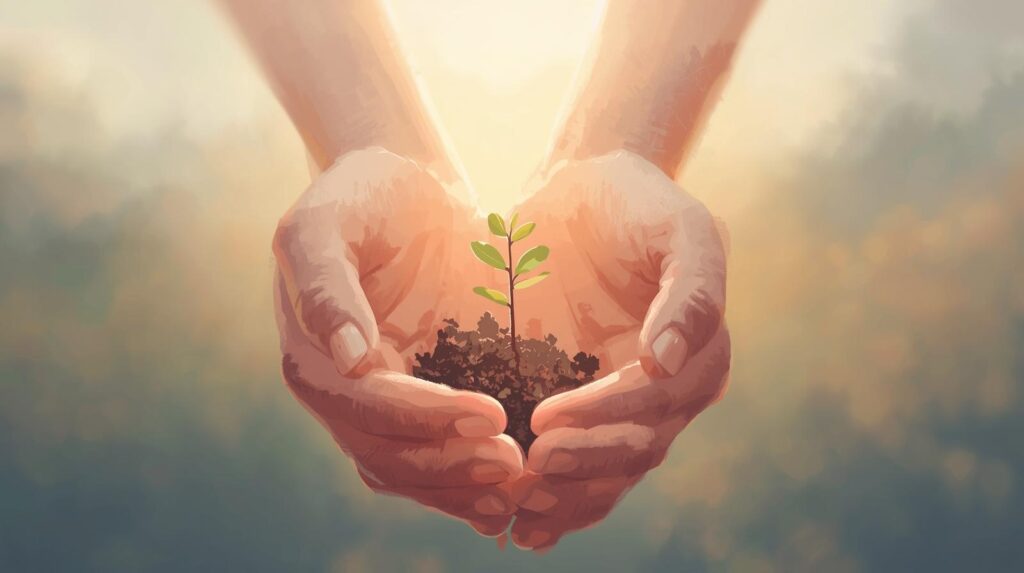
In our current system, the metric of success is GDP—a number that tracks how fast we produce, consume, and deplete. But a rising GDP tells us nothing about the health of our citizens or our planet. In wealthy nations, this obsession with growth has fueled a crisis of overconsumption. The richest 10% of global citizens are responsible for up to 40% of environmental destruction. The poorest 10% cause virtually none. Because a healthy environment is the foundation for human life, this calculation simply does not add up.
To create a sustainable society, we must break free from the growth trap. We need to transition toward a “Post-Growth” or “Well-being Economy”. We can use proven frameworks like the Doughnut Model or the Steady-State Economy. These models flip the script: instead of prioritizing short-term corporate profit, they prioritize long-term ecological and public health.
Shifting away from endless expansion allows us to reduce overconsumption and narrow the gap of inequality. We can design policies that treat clean air, stable climates, and human happiness as our true wealth.
The Architecture of Well-being
True health is never just an individual achievement. It is a collective reflection of the air we breathe, the financial security we feel, and the economic goals we chase. We cannot expect people to thrive in a culture designed around endless depletion.
Shifting toward holistic healthcare, a baseline of financial safety, and a post-growth economy are not just utopian fantasies. They are necessary steps for survival. By rewiring our societal institutions to prioritize human and planetary well-being, we can finally transition from a society that is merely surviving to one that is truly sustainable.
The path forward requires us to slow down, look at the big picture, and demand systems that protect life rather than consume it.
(👉Find out how to become a healthier version of yourself: Turning 40: 40-holistic-lessons)