When the Body Says No
Gabor Matés book ‘When the Body Says No’ explores the hidden stresses caused by trauma. Here’s a summary of the main ideas.
Introducing the mindbody
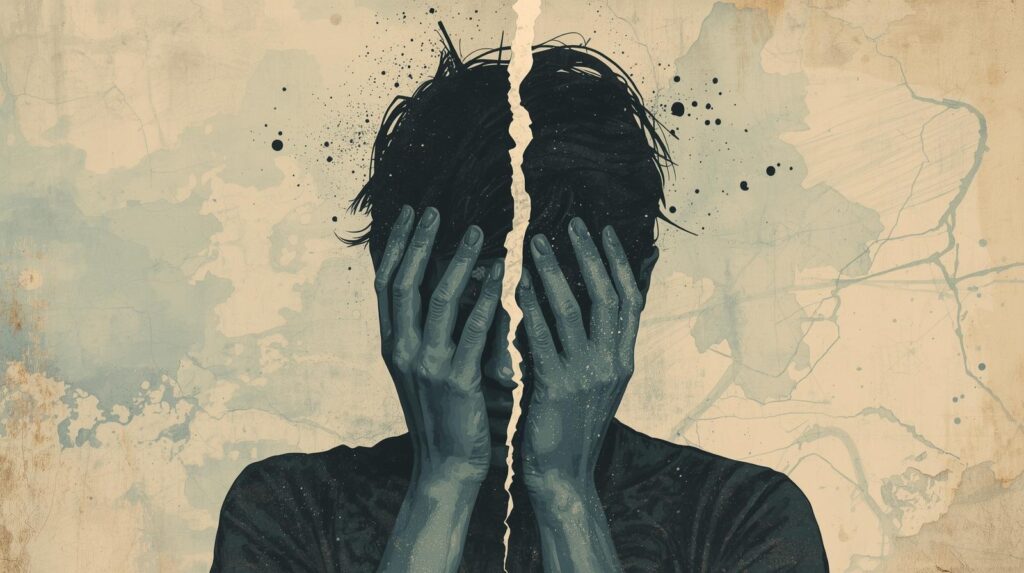
“When we have been prevented from learning to say no’…‘our bodies may end up saying it for us.” (p 3, When the body says no, Penguin Random House, 2019)
Gabor Maté writes at the beginning of his book. As a doctor, he treated patients with many illnesses: multiple sclerosis, cancer, chronic fatigue syndrome, fibromyalgia, migraine, skin problems, bowel issues, endometriosis, and more. He found that many of these conditions could be linked to childhood stress and trauma.
Even though his patients had different illnesses and backgrounds, Maté noticed that none of them had ever learned to say no. For most, not being able to say no and holding back their emotions were major problems.
Maté saw that Western medicine often misses the bigger picture. It usually looks only at the body and its symptoms, but to truly understand health, we need consider our WHOLE selves. This means looking at our life history, emotions, and relationships, not just our symptoms. Our mind, body, and emotions are all connected and should be seen as one; a mind-body.
The PNI super system
How are the mind and body connected? The immune system, nervous system, hormones, and emotional centres in the brain all work together in one system, the PNI super system.
PNI super system:
PNI stands for psycho-neuro-immuno-endocrine. This means emotional centres, the nervous system, the immune system, and the hormonal system. These parts work together to protect the body from problems or imbalances. If one part is affected, the others are too. The PNI super system’s job is to spot threats inside or outside the body and respond to keep things balanced.
Because emotions are part of this system, feeling and expressing them is important for our health.
Emotional competence
In our society, we often overlook the importance of emotional competence. Many of us are not taught how to feel, express, or manage our emotions. Instead, we are told to toughen up or not be so sensitive. However, being emotionally competent is key to living a healthy life and being a sustainable you.
Emotional competence:
Emotional competence means being able to feel and express our emotions, and to stand up for our needs and boundaries. It also means knowing the difference between reactions to the present and leftover feelings from the past. Finally, it involves understanding which needs should be met and working to meet them instead of pushing them aside.
If we lack emotional competence, we are more likely to feel stressed. It also becomes harder to set boundaries and build satisfying relationships.
The role of emotions is to let in what is healthy and nurturing and to keep out what is not. The role of the immune system is the same. Both systems are part of the PNI super system, or mind-body. So when you hold back your emotions, you also weaken your immune system. This lowers your defense against illness, and your immune system may stop recognizing what is harmful.
You can see this in autoimmune diseases. Maté says that people with these conditions often have trouble managing stress and release a lot of cortisol. They usually hold back their emotions and put others’ needs before their own. Their boundaries with others are unclear, both emotionally and physically. As a result, their immune system can’t tell the difference between itself and something foreign, so it starts attacking the body.
Emotional repression and cancer
Cancer happens when the body can’t repair DNA properly and normal cell death doesn’t work as it should. Holding back emotions and long-term stress can make both of these problems worse.
Gabor Maté mentions several studies in which researchers have predicted the occurrence of cancer based on factors of emotional repression alone:
“In one study, psychologists interviewed patients admitted to hospital for breast biopsy, without knowing the pathology result. Researchers were able to predict the presence of cancer in up to 94 per cent of cases judging by such psychological factors alone.” (p 62, When the body says no, Penguin Random House, 2019)
Take lung cancer, for example. Smoking is a major risk factor, but it does not cause cancer by itself. Other risks must be present, or else every smoker would get lung cancer. One important risk is emotional repression.
A group of international researchers did a study on the psychological risk factors for cancer mortality. They chose the city of Cvrenka for the study because it had a high mortality rate and a stable population, making follow-up easier. The researchers selected about 1400 healthy adults and interviewed them using a questionnaire. It was about adverse life events, feelings of hopelessness, and a hyper-rational, non-emotional coping style. They also recorded physical parameters like height, weight, blood pressure, and smoking history.
Ten years later, the researchers followed up and found that 600 people had died from cancer, strokes, heart disease, and other causes. The main thing these people had in common—especially those who died of cancer—was a very rational, anti-emotional way of coping, known as R/A.
People who showed a strong anti-emotional coping style—answering yes to 10 or 11 questions—were 40 times more likely to get cancer than those who answered yes to only about 3 questions. Among smokers, none developed lung cancer unless they also had this high anti-emotional coping score.
The study suggests that smoking and emotional repression together lead to lung cancer. All thirty-eight people in Cvrenka who died of lung cancer were smokers, but smoking alone was not enough to cause the disease.
Holding back emotions raises the risk of cancer because it leads to more stress. Stress can make cancer more likely by weakening the immune system and upsetting the body’s balance.
The researchers of the Cvrenka study had also predicted who among their nearly fourteen hundred subjects would develop cancer and die of it. They based their predictions on characteristics of rationality/anti-emotionality and a long-lasting sense of hopelessness. Checking the death records ten years later, they had been right in 78 per cent of cases.
“It seems to us’, they commented, ‘that the importance of psychosomatic risk factors is likely to have been grossly underestimated in many studies.” (p 99, When the body says no)
What is stress?
Stress can have many sources. Sometimes it is obvious, like war, job loss, or death in the family. But stressors can also be more subtle and harder to detect.
If your boundaries are violated or you over-adapt to other people’s expectations, it causes internal stress. So does having a poor sense of who you are. If you struggle to know yourself, it is hard to get your needs met or set boundaries. This can make it tough to build close, supportive relationships, which can lead to loneliness, anxiety, and feeling overwhelmed.

Healthy relationships and self-differentiation
To do well in life, we need healthy relationships. For adults, having emotionally satisfying relationships depends on self-differentiation.
Self-differentiation:
You are able to define yourself as separate from others and autonomous in your emotions, whilst remaining emotionally connected with others. You are able to express your needs and emotions without tailoring them to fit other people’s needs. You neither repress emotions nor act them out impulsively.
Someone who is self-differentiated can manage their emotions and calm themselves during stress or conflict. In general, these people feel less stressed and have better health.
The less self-differentiated we are, the more likely we are to experience relationship stress. Conflict or separation can be very stressful to a less self-differentiated person.
Lack of self-differentiation can lead to co-dependent relationships. These relationships lack boundaries, and each person subconsciously wants the other to fulfill their needs without asking for it directly. It might even be difficult for each individual to know what they want.
People who are less self-differentiated often rely on others to manage their emotions. The more they depend on others, the more they fear losing them or making them upset. To avoid stress, they may try to please others, but this means giving up some independence. Losing autonomy causes more stress and leads to unhealthy relationships. Constantly holding back emotions and adapting to others can raise the risk of illness.
Becoming independent and self-differentiated is a normal and important part of growing up. It helps us become healthy adults who can take care of ourselves in a mature and confident way.
Childhood development sets the stage
Learning self-differentiation occurs – or fails to occur – during childhood.
The human brain develops the most during early childhood. Children learn how safe or stressful the world is by connecting to their parents. The child ‘downloads’ the circuit of his parents into his own nervous system. If a child downloads a stressed-out, dysregulated circuit, that becomes the template for their own nervous system.
Vital for the healthy connection between parent and child is the process of attunement.
Attunement:
A process in which the parent ‘tunes in’ to the child’s emotional needs. It is an instinctual emotional connection in which the parent reads the child’s signals and responds appropriately. Attunement regulates the child’s nervous system, signaling safety and connection.
If a parent cannot tune in to their child’s needs, it can lead to long-term problems like attachment issues or higher stress. This can cause both physical and mental health problems. In fact, a lot of childhood trauma comes not from severe abuse, but from a lack of attunement during those early years.
Most parents try to care for their children with love. However, they may not be able to tune in to their child’s needs if they are stressed or if their own parents never did this for them. You cannot teach what you have not learned. If you have never felt safe and relaxed, you might pass on stress and attachment problems to your children without realizing it.

The family system
Many of Gabor Maté’s patients had a family history with generations of disease and of members of the same generation suffering from disparate illnesses. A primary cause is stress and trauma passed down through the generations.
Physical and mental illnesses come from problems in the family’s emotional system. That system includes past and present generations. Each family member deals with these problems in their own way, which can lead to different diseases – some may have autoimmune disease, others cancer, alcoholism, depression, and other mental and physical health issues.
Dysfunctional family systems often share four traits: enmeshment, being overprotective or controlling, rigidity, and lack of conflict resolution.
Enmeshment:
Enmeshment manifests as weak boundaries between individuals or a lack of appreciation of individuality. Needs are met through control or manipulation rather than through open communication
An enmeshed family pressures each member to give up their own needs and wants to serve the family system. The family decides what is right or wrong and what values everyone should live by. This often happens in subtle, unconscious ways and can be hard to notice.
As a result, people from enmeshed families often struggle with self-differentiation. This makes it hard for them to have emotionally satisfying lives and increases their risk of stress and illness.
Learning about the family system is not about blaming anyone. It helps us see ourselves as part of something bigger. This gives us a clearer picture of why we are struggling. The aim is to find balance and understanding so we can help ourselves as much as possible.
The power of (negative) thinking
Maté believes that thinking about the negative parts of our lives is important for healing. To get better, we need to face what is not working.
Positive thinking often ignores the negative or unwanted parts of life. But real positivity means accepting all parts of ourselves, even the hard or messy ones. In this sense, negative thinking is simply thinking honestly, without needing to call it positive.
Thinking negatively is not about being a pessimist or always complaining. It means having the courage to look at every part of who we are. Negative thinking helps us understand how our life circumstances have shaped us.
One important area to examine is our relationships. This can be hard because we may have mixed feelings. We might love our family, but some family dynamics could be unhealthy or even abusive. How can we set boundaries with loved ones and still keep a caring connection?
In his medical work, Gabor Maté has noticed that stressful family relationships are a major risk factor for many serious illnesses. As part of healing, we should look at our close relationships, both past and present. The goal is not to blame anyone, but to spot unhealthy patterns that may be harming our health.
The dilemma of anger
When we start looking closely at our relationships, we may feel anger or aggression. Anger is a normal emotion that helps us protect our boundaries. However, showing anger toward loved ones can make us feel guilty or anxious, since we also care about them and want to stay close. This is the main challenge with anger, and it may be why many people find it hard to express.
But it is very important to be in touch with anger. If you cannot respond when your boundaries are violated, you may build up a lot of stress over time. On the other hand, letting anger explode in an uncontrolled way can seriously damage our relationships.
So what should we do? How can we handle the dilemma of anger?
We need to find healthy ways to deal with anger. Holding it in or letting it out without control are both unhealthy ways of coping. These reactions often come from being afraid to truly feel anger.
Healthy anger gives us a sense of strength and helps us respond to problems. It tells us when something is wrong, like when a boundary has been crossed or there is a threat. If you let yourself feel anger, you can pause and ask: What caused this anger? How should I respond?
You can choose to express the anger in some way, or you can choose not to. The importance of healthy anger is that it leaves the individual – not the emotion – in charge.
Anger is an important tool in the toolbox of being a human. It is a friend, not an enemy, as this quote beautifully expresses it:
“‘Anger is the energy Mother Nature gives us as little kids to stand forward on our own behalf and say I MATTER,’…. ‘The difference between the healthy energy of anger and the hurtful energy of emotional and physical violence is that anger respects boundaries. Standing forward on your own behalf does not invade anyone else’s boundaries.” (p 274, When the body says no)
The path to healing
Many things can cause disease. Even with risk factors like genetics or unhealthy habits, disease does not happen on its own, separate from the environment. It is a process shaped by biology, psychology, and social factors. We are always affected by the mix of these influences. To heal, we need to find new and healthier ways to connect with our surroundings and with other people.
According to Gabor Maté, healing is about creating balance and becoming more whole. It is a holistic process that looks at our entire life story and current situation.
Healing can only happen as a free and informed choice and cannot be forced or pressured. We can pick the treatments that work best for us. These might include conventional medicine, complementary healing, mind-body techniques, ancient Eastern practices like Ayurvedic medicine, yoga or acupuncture, meditation techniques, psychotherapy – the list could go on.
Ultimately, the wish to heal and the ability to change come from within:
“Whatever external treatment is administered, the healing agent lies within. The internal milieu must be changed. To find health, and to know it fully, necessitates a quest, a journey to the centre of our own biology of belief. That means rethinking and recognizing – re– cognizing: literally, to ‘know again’ – our lives.” (p 238, When the body says no)
❤️
[…] When the body says no […]
[…] When the Body Says No […]